
Is ChatGPT Safe for Kids? What Parents Should Know (and Kid-Safe Alternatives)
Is there a kid-safe ChatGPT? See OpenAI's age rules, what its parental controls do and don't cover, and how kid-focused AI tools compare. Checked Oct 2026.
Is there a kid-safe ChatGPT? Not for young children. As of October 2026, OpenAI requires users to be at least 13, and teens under 18 need a parent's permission. For teens 13 to 17, OpenAI offers a teen experience and parental controls. For kids under 13, the better route is a tool designed for their age, with you in the loop.
Quick summary
- ChatGPT's minimum age is 13; under-18s need a parent's or guardian's permission (OpenAI terms, checked October 23, 2026).
- Parental controls let you link accounts, set quiet hours, and switch off features like voice, images, and memory. They don't let you read your teen's chats.
- ChatGPT has a study mode that guides with hints, but a teen can switch it off.
- Independent testers have raised serious concerns; OpenAI has published safeguards. Both deserve a look.
- For under-13s, choose a kid-focused AI with parent visibility and time limits, and stay involved.
Is there a kid-safe ChatGPT? Start with the age rules
OpenAI's Terms of Use (effective January 1, 2026; checked October 23, 2026) say you must be at least 13, or older if your country's minimum age for consent is higher. If you're under 18, you need a parent's or legal guardian's permission.
So for a 7- or 10-year-old, the answer to "kids ChatGPT?" is simple: they shouldn't have their own account.
OpenAI is also working on age prediction (announced September 2025). The idea: when the system can't tell a user's age with confidence, it defaults to the under-18 experience, with stricter content rules. Adults can verify their age to unlock the full experience.
What do ChatGPT's parental controls do?
According to OpenAI's help center article on parental controls (checked October 23, 2026), a parent and a teen can link accounts by email or phone invite. Once linked, a parent can:
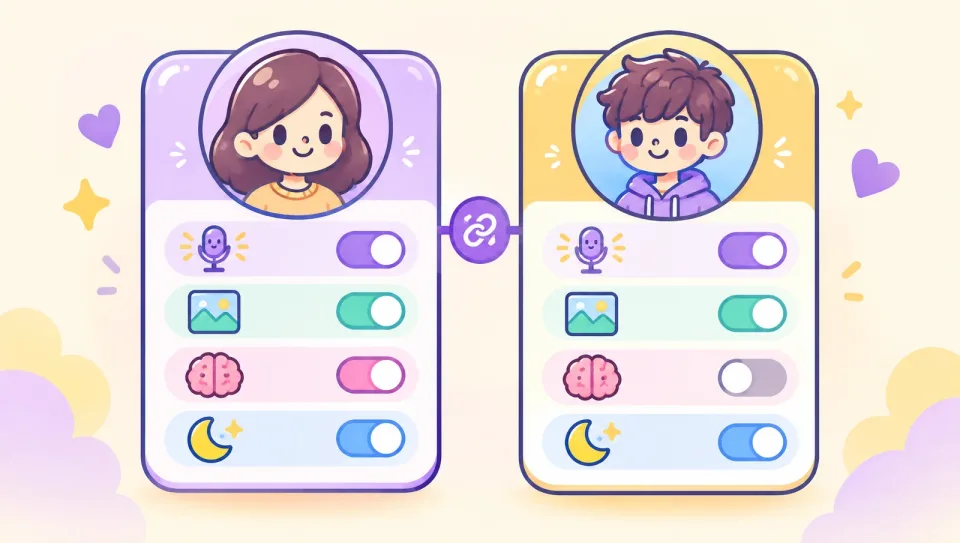
- Reduce sensitive content (on by default), adding safeguards around graphic content, viral challenges, sexual or violent roleplay, and extreme beauty ideals.
- Set quiet hours when ChatGPT can't be used.
- Turn off voice mode, image generation, and the use of saved memories.
- Opt out of the teen's chats being used to improve models.
- Turn on study mode by default for new chats, or set study hours.
- Receive safety notifications if trained reviewers identify a serious self-harm or disordered-eating concern.
What parental controls don't do matters just as much:
- Parents can't read the teen's conversations or chat history.
- Safety notifications aren't real-time monitoring and don't include transcripts.
- Either person can unlink at any time (the parent is notified if the teen does).
- Study mode and study hours set defaults; they don't block regular chat.
This is a reasonable design for older teens who need some privacy. It's a weaker fit for a parent who wants to see what a younger child is doing.
Does ChatGPT help kids learn, or just give answers?
Both are possible. In July 2025, OpenAI launched study mode, which uses questions, hints, and quizzes instead of handing over answers. OpenAI itself notes it can behave inconsistently, and users can switch it on or off mid-conversation.
That flexibility is the catch. A motivated student can turn study mode off and ask for the finished essay. And plenty do: in a Pew Research Center survey (2026), 59% of U.S. teens said students at their school use AI to cheat at least somewhat often.
For practical homework strategies, see our guide on how to help with homework without doing it for them.
What do independent reviewers say?
It's fair to hear both sides.
OpenAI's position: The company says it prioritizes teen safety when it conflicts with privacy and freedom, applies age-appropriate rules to under-18 users, and has added parental controls and break reminders (OpenAI, 2025).
Common Sense Media's testing: In October 2026, Common Sense Media's Youth AI Safety Institute rated ChatGPT for Teens an "Unacceptable Risk". Its testers reported that parent alerts didn't trigger in new linked teen accounts during hour-long sensitive conversations, that crisis referrals were sometimes missed, and that study mode could be bypassed. It also credited some protections that worked, such as refusing sexual roleplay. Its advice to parents: don't rely on built-in alerts alone, and talk with your teen about the risks.
Regulators: In September 2025, the FTC opened an inquiry into seven companies, including OpenAI, about how their chatbots affect children and teens.
Our view: ChatGPT is a powerful general tool, and OpenAI has added real teen features. But it was built for adults first, and its safeguards are still being tested in public. Treat it as something you supervise, not something you set and forget.
Should I let my kid use ChatGPT?
It depends mostly on age.
Under 13
No personal account. If you want your child to explore AI, use it together on your account, side by side, or pick a tool made for kids.
13 to 15
Possible, with you involved. Link accounts, set quiet hours, keep sensitive-content reduction on, and turn on study mode by default. Agree on what "help" means versus "doing it for me." Check in often, since you won't see the chats.
16 to 17
More independence makes sense. Keep the conversation open about privacy, emotional use, and academic honesty. Remind them that AI can be confidently wrong.
At any age, watch for signs of over-reliance: your child can't explain finished work, or treats the chatbot like a confidant instead of a tool.
How does ChatGPT compare with a safe AI chatbot for kids?
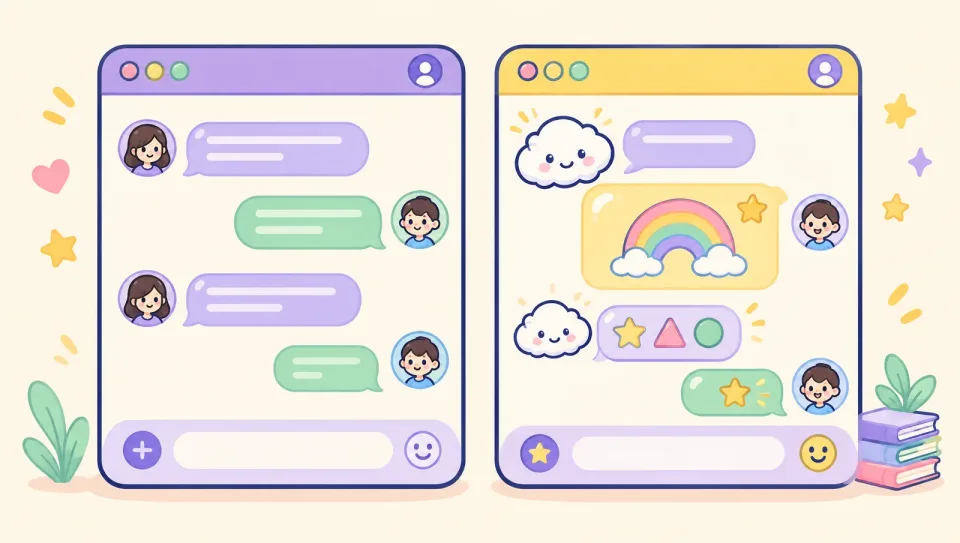
This table compares by criteria, not by brand. "Kid-focused AI companion" describes what to look for in a well-designed product; individual tools differ, so check each one.
| Criteria | ChatGPT (with teen settings) | Kid-focused AI companion (what to look for) |
|---|---|---|
| Intended age | 13+, parent permission under 18 | Clear range that includes under-13s |
| Account created by | The teen or the parent | The parent |
| Parent can read chats | No | Yes, or clear summaries |
| Time controls | Quiet hours | Daily or weekly limits |
| Safety alerts | For serious self-harm or eating concerns, reviewed by people | Alerts for worrying topics |
| Default learning style | General chat; study mode optional | Guided explanations by default |
| Breadth | Very broad: writing, coding, images, research | Narrower, focused on learning and curiosity |
| Can be wrong | Yes | Yes |
ChatGPT wins on breadth and power. A kid-focused tool should win on fit for younger children and parent visibility. Neither replaces your involvement. For a broader checklist, read our parent's guide to AI for kids.
How Heynour fits in
Heynour is an AI learning companion built for kids ages 6 to 14, in Arabic and English. It's the kind of tool in the right-hand column above. You create the account and add your child. Through Heynour's parent dashboard, you can read your child's conversations, set a daily time limit, get instant alerts if something worrying comes up, and receive a weekly report on rounds and effort.
Your child types or speaks, and Heynour explains at their level, guiding step by step instead of handing over answers. Photographing a homework question is part of the Plus plan.
Heynour does far less than ChatGPT, on purpose, and it can still make mistakes. It doesn't replace you or your child's teacher. You can start on the free plan (60 minutes a week) and see whether it suits your family: see Heynour plans.
FAQ
Is there a kid-safe version of ChatGPT?
There is no separate ChatGPT for young children. As of October 2026, OpenAI requires users to be at least 13, with a parent's permission under 18. Teens get an under-18 experience with stricter content rules, and parents can link accounts and adjust settings. For children under 13, a tool designed for that age group is a better fit.
Can parents see their child's ChatGPT conversations?
No. OpenAI's help center, checked in October 2026, says parental controls don't give access to a teen's conversations, chat history, or real-time activity. Parents can change settings like quiet hours, voice, images, and memory, and may get a safety notification for serious concerns, but notifications don't include chat transcripts.
What age is appropriate for ChatGPT?
OpenAI's minimum age is 13, and anyone under 18 needs a parent's or guardian's permission. Some countries set a higher minimum age for consent, which then applies. Beyond the rules, consider your child's maturity, how much you'll stay involved, and whether they understand that AI can sound sure of itself and still be wrong.
Is ChatGPT study mode good for kids?
Study mode is a helpful step: it asks guiding questions, gives hints, and quizzes instead of handing over answers. But OpenAI notes it can be inconsistent, and users can switch it off during a chat. It's best for motivated teens with parents who check in, rather than a guarantee that homework won't simply be done for them.
What is a safe AI chatbot for kids?
No chatbot is perfectly safe, but a safer AI chatbot for kids is built for their age, created and managed by a parent, guides learning instead of giving answers, offers time limits and alerts, and lets parents see what's happening. It should also be honest that AI can make mistakes. Supervision and open conversation remain essential.
Sources
- OpenAI, Terms of Use (effective January 1, 2026; checked October 23, 2026)
- OpenAI Help Center, Parental controls for ChatGPT (checked October 23, 2026)
- OpenAI, "Building towards age prediction" (September 2025)
- OpenAI, "Introducing study mode" (July 2025)
- Common Sense Media, "ChatGPT for Teens Poses Unacceptable Risk to Kids" (October 2026)
- Pew Research Center, "How Teens Use and View AI" (February 2026)
- FTC, "FTC Launches Inquiry into AI Chatbots Acting as Companions" (September 2025)